FAQ guide
Passport Photo Glasses Rules by Document Type
Learn when glasses are allowed in passport and visa photos, where they usually cause rejection, and why removing them is still the safest option before upload.
Last updated Apr 23, 2026
Verified against the official source · May 11, 2026Glasses Are One of the Most Common Reasons a Photo Gets Rejected
Many applicants assume clear prescription glasses are always acceptable, but modern biometric photo rules are much stricter. Even when a country technically allows glasses in limited cases, glare, heavy frames, and partial eye obstruction still cause frequent rejection.
- US visa photos do not allow glasses.
- Schengen biometric photos generally do not allow glasses.
- Many passport authorities recommend removing glasses even when the wording is less absolute.
Why Glasses Trigger Rejection
Biometric systems need clear, unobstructed visibility of both eyes and the surrounding face shape. Reflections, dark frames, or lens tint can interfere with automatic checks and human review.
- Lens glare hides the eyes.
- Frames can cover the eye contour or eyebrows.
- Tinted lenses and reflections reduce facial recognition accuracy.
Best Practice Before You Upload
If you can remove your glasses, do it. It is the safest choice across passport, visa, and eVisa flows and reduces rejection risk immediately.
Photo Examples
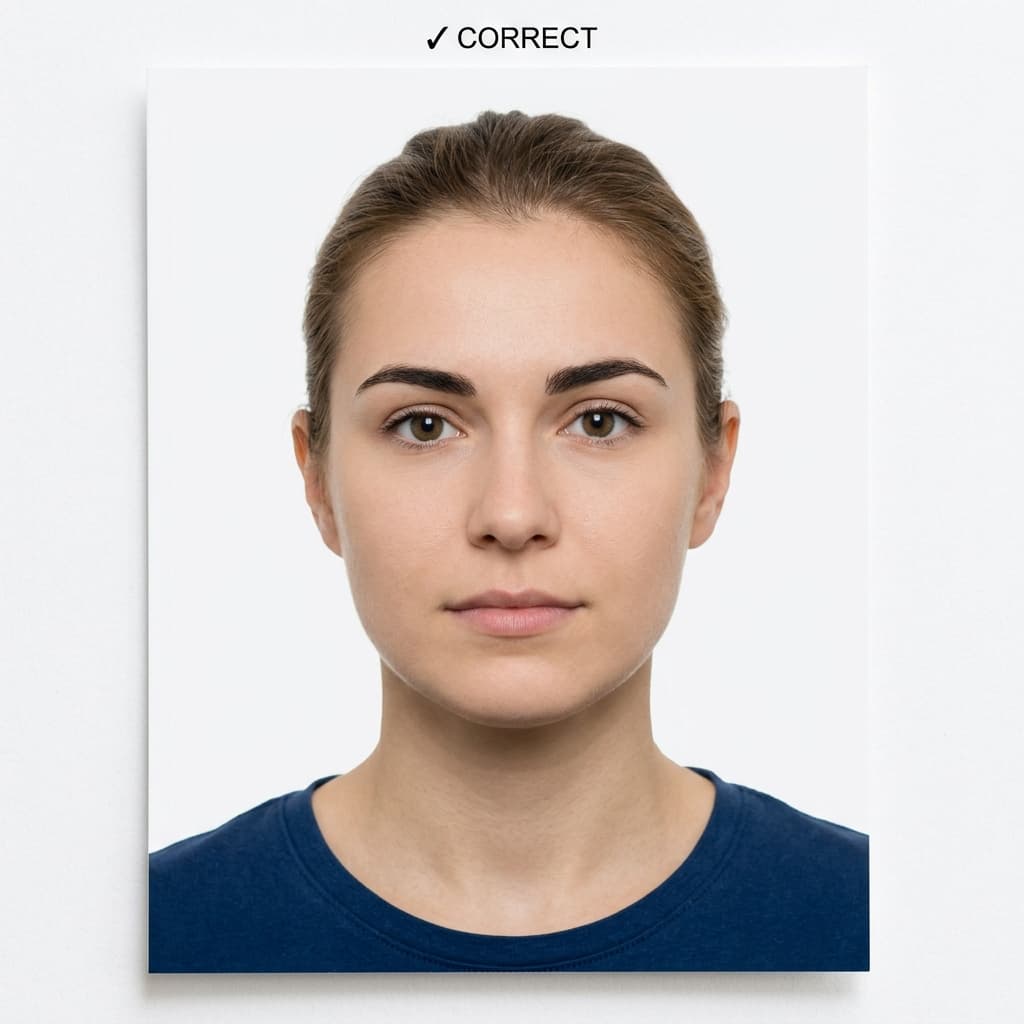
Pass example
Correct photo
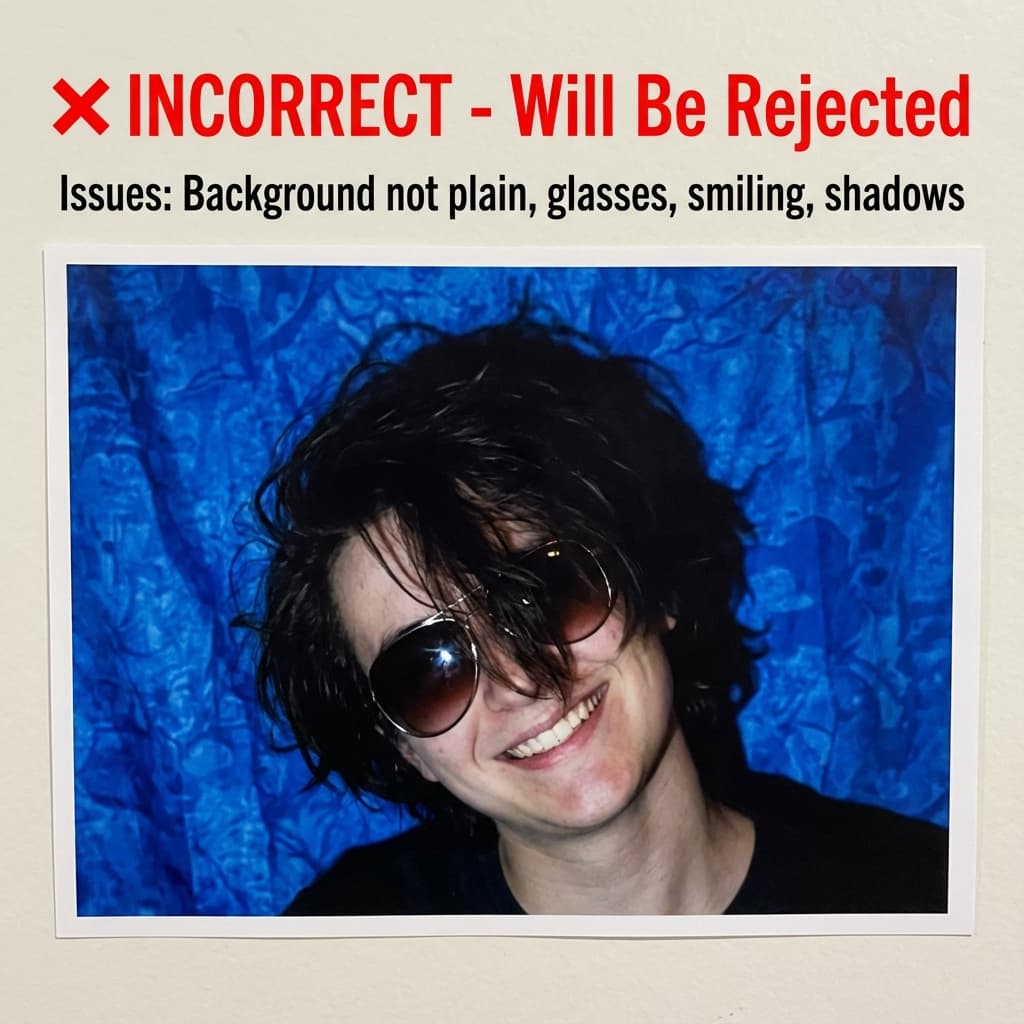
Common rejection risk
Incorrect photo
Real Passport Photo Glasses Rules Rejection Data
38.0% of Passport Photo Glasses Rules photos were rejected on first submission, based on 234 checks run through VisaPhotoCheck.
Most common reasons a rejected photo failed
- Crop or framing39%
- Accessories (glasses, hats, headphones)28%
- Expression13%
- Head pose or angle13%
- File size or format11%
- Lighting or shadows10%
- Resolution3%
- sharpness2%
- Background1%
Each figure is the share of rejected Passport Photo Glasses Rules photos that failed that specific check. A single rejection often fails more than one check, so these do not add up to 100%.
Based on VisaPhotoCheck's own Passport Photo Glasses Rules submissions — this reflects our users, not an official or industry-wide rejection rate.
Frequently Asked Questions
Related Document Requirements
35x45mm Photo
Check a 35x45mm (3.5x4.5 cm) passport or visa photo online, free. Exact size in mm and pixels, head height and backgroun...
Germany Passport Photo
Free Germany passport photo checker. Validate a 35x45mm biometric passport photo with light neutral background and ICAO-...
France Passport Photo
Free France passport photo checker. Validate your 35x45mm biometric passport photo for French applications with the corr...
Spain Passport Photo
Free Spain passport photo checker. Validate your 35x45mm biometric passport photo for Spanish applications before upload...
Schengen Visa
Check and fix your Schengen visa photo online. Create a 35x45mm biometric photo for France, Germany, Italy, Spain, and o...
Canada Visa
Check and fix your Canada visa photo for IRCC applications. Create a 35x45mm TRV, study permit, or work permit photo wit...
UK Passport
Free online UK passport photo checker. Create HM Passport Office compliant photos with cream/light grey background (not ...
Australia Passport
Free online Australian passport photo checker. AI validates the 35–40mm × 45–50mm format and enforces the strict 32–36mm...